
Key Insights
- Sextortion scams usually start with fake profiles on social media or dating apps that quickly build trust before turning conversations intimate.
- Cyber criminals often use pre-recorded videos and screen recording tools to secretly capture victims during video calls.
- Most sextortion threats rely on psychological pressure, making victims panic and send money quickly to avoid embarrassment.
- Paying the scammer rarely stops the blackmail, as criminals often continue demanding more money after the first payment.
- Early action and proper digital evidence collection can significantly help in identifying the scammers and stopping further harassment.
The internet has made communication easier than ever before. Social media platforms, dating apps, and messaging services allow people to connect instantly with others across the world. While these platforms offer convenience and opportunities to meet new people, they have also opened the door for a new and disturbing form of cybercrime known as sextortion.
Sextortion scams have been rising rapidly in recent years, targeting individuals of all ages. These scams rely on manipulation, fear, and digital anonymity to pressure victims into paying money or complying with the demands of cyber criminals. Many victims feel embarrassed or frightened, which often prevents them from reporting the crime.
Understanding how sextortion scams work can help individuals recognize warning signs early and avoid falling into these traps. In this article, we will explore the common tactics used by cyber criminals and how a professional sextortion investigation can help address such cases.
What Is Sextortion and Why Is It Increasing So Rapidly?
Sextortion is a form of online blackmail where criminals threaten to release intimate photos, videos, or private conversations unless the victim pays money or fulfills certain demands.
Unlike traditional blackmail, sextortion usually happens entirely online. The criminal often hides behind fake identities, making it difficult for victims to identify who they are dealing with.
There are several reasons why sextortion scams have increased significantly:
- The widespread use of social media platforms and dating apps
- Easy access to fake profiles and anonymous accounts
- The ability to contact large numbers of potential victims quickly
- The emotional pressure and embarrassment victims often feel
Cyber criminals know that victims may panic when faced with threats of exposing personal content. This emotional reaction is exactly what scammers rely on to force quick payments.
How Do Sextortion Scams Usually Start?
Most sextortion scams begin with what appears to be a normal online interaction.
The criminal may send a friend request on social media, match with someone on a dating app, or initiate a conversation through messaging platforms. Often, the profile looks attractive and convincing, with carefully selected photos and believable personal details.
In many cases, the conversation starts casually and gradually becomes more personal. The scammer may appear friendly, charming, or even flirtatious to gain the victim’s trust.
Once the conversation becomes more private, the scammer may suggest moving to another platform such as:
- WhatsApp
- Telegram
- Instagram direct messages
- Video chat platforms
Moving the conversation to a private space allows the criminal to manipulate the situation more easily.
What Tricks Do Sextortionists Use to Trap Victims?
Cyber criminals use several tactics to manipulate victims into sharing private content or participating in compromising situations.
One of the most common methods involves fake video calls. During these calls, the scammer may play pre-recorded videos of someone appearing to engage in intimate behavior. The victim may believe they are interacting live with the person on the screen.
Meanwhile, the criminal secretly records the victim through screen capture or recording software.
Another common tactic is sending explicit images first. By doing this, the scammer tries to make the victim feel comfortable and encourage them to respond with similar content.
Some criminals also operate in organized networks. These groups may run hundreds of fake accounts simultaneously, targeting multiple victims at once.
Their methods often include:
- Using stolen profile pictures
- Pretending to be models or influencers
- Creating fake romantic connections
- Encouraging victims to share private photos
These tactics are designed to build trust quickly before turning the situation into a threat.
What Happens After the Criminal Gets the Content?
Once the scammer obtains compromising photos, videos, or recordings, the tone of the conversation usually changes instantly.
The criminal may suddenly reveal that they have recorded everything. They then begin sending threatening messages demanding money.
Typical threats include statements such as:
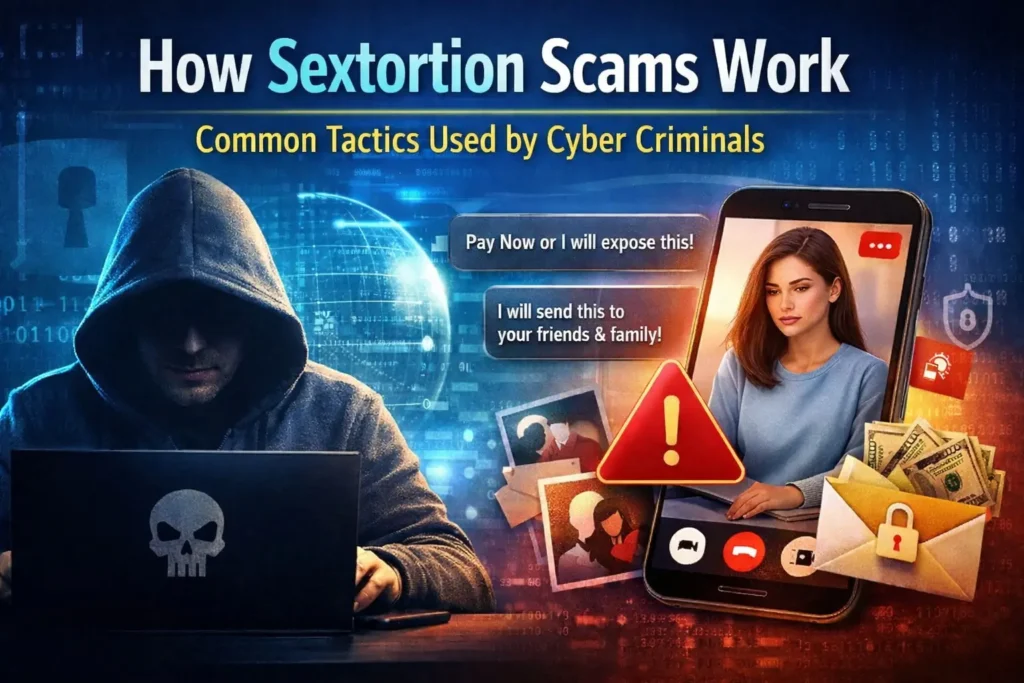
- “I will send this video to all your friends and family.”
- “I have your followers list and will expose you.”
- “Pay immediately or everyone will see this.”
To increase pressure, scammers may even send screenshots of the victim’s social media contact list.
In many cases, the victim is asked to transfer money through:
- Digital wallets
- Cryptocurrency
- Gift cards
- International money transfers
Unfortunately, paying the scammer rarely solves the problem. Many victims who pay once receive additional demands for more money.
Why Do Victims Feel Forced to Pay Sextortionists?
Sextortion scams rely heavily on psychological pressure.
Victims often feel overwhelmed by fear, embarrassment, or panic. The thought of personal photos or videos being shared publicly can be extremely distressing.
Scammers exploit this fear by creating urgency. They may set short deadlines, threaten immediate exposure, or repeatedly send aggressive messages.
Several factors contribute to victims feeling forced to pay:
- Fear of reputational damage
- Concern about family or professional consequences
- Emotional stress and panic
- Lack of awareness about available help
Because of these pressures, some victims believe paying is the only way to stop the threats.
Can Sextortionists Actually Send the Content to Your Contacts?
In many sextortion cases, criminals rely more on fear than actual action.
Some scammers never follow through with their threats because exposing the victim would remove their leverage. However, this does not mean the threat should be ignored.
In certain situations, criminals may attempt to send content to a small number of contacts to demonstrate they are serious.
This is why responding calmly and taking proper steps is important rather than reacting impulsively.
What Should You Do If Someone Is Trying to Sextort You?
If someone threatens you with sextortion, the most important thing is not to panic.
Although the situation can feel overwhelming, there are practical steps that can help protect you.
Some important actions include:
- Do not send money or comply with demands
- Stop communication with the scammer
- Save all evidence such as screenshots, usernames, and messages
- Report the account to the platform where the interaction occurred
- Inform cybercrime authorities if necessary
Keeping records of the conversation can be extremely helpful for investigators who may need to track the individual responsible.
How Professional Investigators Help in Sextortion Cases
Handling sextortion situations often requires a careful and discreet approach. Professional investigators can assist victims by analyzing digital evidence and identifying patterns used by scammers.
A professional sextortion investigation investigation involve:
- Examining digital profiles used by the scammer
- Identifying linked accounts and online footprints
- Preserving important digital evidence
- Tracking patterns connected to organized scam networks
Investigators may also help victims understand how to respond to threats and how to secure their online accounts.
Because many sextortion scams involve international networks, specialized investigative methods and digital analysis are often required to trace the source.
Final Thoughts
Sextortion scams have become one of the fastest-growing forms of online blackmail. Cyber criminals exploit anonymity, emotional manipulation, and digital platforms to trap victims and pressure them into paying money.
Understanding how these scams work is the first step toward protecting yourself and others from falling into these traps.
Remaining cautious when interacting with strangers online, avoiding sharing private content with unknown individuals, and recognizing warning signs can significantly reduce the risk of becoming a target.
At Eyewitness, our investigative team regularly analyzes digital threats and helps individuals understand how modern cyber scams operate. Through awareness and investigative insight, we aim to help people stay informed and safer in the digital world.
To learn more about real investigative cases and online safety insights, keep visiting the Eyewitness blog for expert perspectives on emerging cyber threats.
FAQs
The Epstein files are a collection of investigative documents, emails, photos, and witness testimonies related to the criminal investigations of financier Jeffrey Epstein.
Authorities reported that Epstein abused hundreds of victims, with more than 250 victims identified during investigations.
Government transparency laws required the release of investigative documents while protecting victims’ identities.
Some documents referenced well-known figures who had contact with Epstein, though being mentioned in the files does not automatically imply wrongdoing.
Redactions are used to protect victims, ongoing investigations, and sensitive legal information.
The case highlights the importance of digital evidence, witness verification, documentation, and multi-agency cooperation in complex criminal investigations.